Guest Blog by Simply Lynn’s Creative
If you’re running a boutique on Shopify, you already know that email marketing is one of the most effective ways to keep your customers coming back. Whether you’re promoting a new arrivals drop, announcing a seasonal sale, or reminding someone about that pair of earrings sitting in their cart, email keeps you top of mind with the people who already love your store.
But choosing the right email platform? That’s where things can get a little confusing. And the question I hear allll the time from boutique owners is this: should I stick with Shopify Email, or is it time to move to Klaviyo?
Both let you send campaigns. Both connect to your Shopify store. But they serve very different purposes depending on where your boutique is right now and where you want it to go. So let’s break down the real differences so you can make the call that’s right for your business!
A Quick Look at Shopify Email
Shopify Email is Shopify’s built-in email tool, and for a lot of boutique owners, it’s the first email platform they ever use. That makes total sense because it’s already inside your Shopify dashboard. No extra login. No new platform to learn. It’s right there.
You can pull products directly from your store catalog, send promotions using pre-built templates, and get started without much technical setup. For boutiques just dipping their toes into email marketing, that low barrier to entry is a real advantage.
And the pricing is hard to argue with. Shopify Email gives you a set number of free emails per month, with affordable rates after that. If you’re a newer boutique with a smaller list just getting into the habit of showing up in inboxes, it can be a solid starting point.
Where it starts to fall short is when you want to do more than send a newsletter here and there. Limited automation, basic segmentation, and minimal reporting are fine when you’re just getting started. But as your customer list grows and you want your emails to actually work for you (instead of just go out), those limitations become noticeable.
So, What is Klaviyo?
Klaviyo is an email and SMS marketing platform built specifically for eCommerce brands, and it’s become one of the most popular platforms for Shopify store owners for good reason.
Where Shopify Email gives you the basics, Klaviyo gives you the full picture of who your customers are and how they shop. It tracks browsing behavior, purchase history, product preferences, and email engagement, then lets you use all of that data to send smarter, more targeted messages.
For boutique owners who want their emails to feel personal (not like a mass blast to every subscriber on the list), that level of data makes a real difference.
Some of the features that make Klaviyo stand out for retailers:
- Advanced email and SMS automation
- Detailed customer segmentation based on shopping behavior
- Predictive analytics (like expected next purchase date)
- Revenue tracking tied to specific campaigns and flows
- Highly customizable email templates
- Product recommendation blocks based on browsing and purchase history
The bottom line? Klaviyo lets you build an email system that works in the background, turning one-time shoppers into repeat customers without you having to manually send every single email.
Shopify Email vs. Klaviyo: The Major Differences for Boutique Owners
I try to stay unbiased with my recommendations because here’s what I know to be true: there’s rarely a one-size-fits-all tool. Your boutique is unique, your budget is unique, and your comfort level with tech is unique. So I’d rather give you allll the information and let you decide what makes sense for your store right now.
That said, there are some major differences between these two platforms that are worth paying attention to.
The biggest difference comes down to simplicity versus strategy. Shopify Email is built for quick, easy communication. Klaviyo is built for long-term revenue growth through smarter email marketing. Both are valid, but they serve different goals.
Automation Capabilities
This is where the gap between the two platforms gets wide, fast.
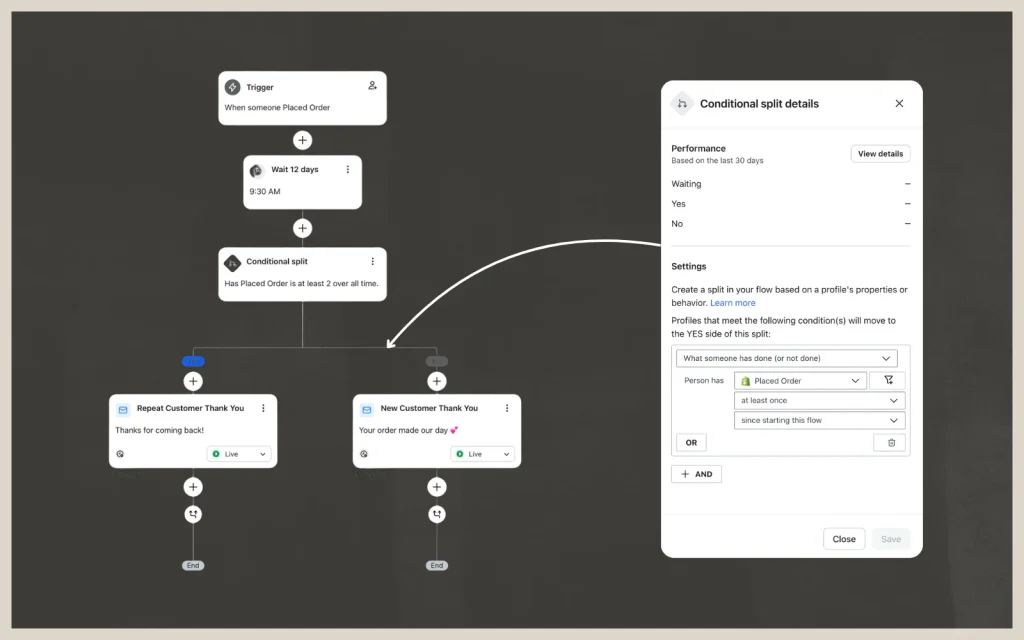
Shopify Email gives you the basics: a welcome email, abandoned cart reminders, and a few simple automations. Klaviyo lets you build detailed automated flows that respond to exactly what your customers are doing (and not doing) in your store.
Think about what this means for a boutique:
- A welcome series that introduces new subscribers to your brand story, your bestsellers, and your shopping experience
- A post-purchase follow-up that thanks a customer and suggests pieces that pair with what they just bought
- Browse abandonment emails that remind a shopper about the dress they looked at three times but didn’t add to cart
- Win-back campaigns that re-engage customers who haven’t shopped with you in a few months
- VIP flows that reward your most loyal shoppers with early access to new drops or exclusive offers
These flows run continuously, generating revenue for your boutique while you’re attending market, spending time with family, or literally doing anything else. That’s the power of strategic automation.
Customer Segmentation
Segmentation is where Klaviyo really starts to shine for boutique owners, and it can be a HUGE advantage when you’re competing with larger retailers and big-box brands.
Shopify Email lets you send to basic customer groups. Klaviyo lets you get specific.
Here’s what that looks like in a retail context:
- Segment by purchase frequency so you can treat a first-time buyer differently than your ride-or-die regulars
- Segment by average order value so you know who to send your premium collection launches to
- Segment by product category so your kids and baby customers aren’t getting emails about cocktail dresses
- Segment by engagement level so you stop sending to people who haven’t opened an email in six months (this protects your deliverability, too!)
- Segment by location so you can send in-store event invites only to your local shoppers
When your emails are more relevant, your open rates go up, your click rates go up, and your sales go up. It’s really that straightforward. People respond to emails that feel like they were written for them, not blasted to a list of 5,000.
Data and Reporting
Shopify Email gives you opens and clicks. That’s helpful, but it only tells you part of the story.
With Klaviyo, you can see things like:
- Exactly how much revenue a specific campaign generated
- Which products are being purchased through email
- Customer lifetime value trends
- Predictive analytics that estimate when a customer is likely to purchase again
- Engagement trends across your full subscriber list
For boutique owners making decisions about what to buy at market, which collections to push, and where to focus your marketing energy, this data is incredibly valuable. You’re not guessing anymore. You’re making informed decisions backed by real customer behavior.
Customization and Design
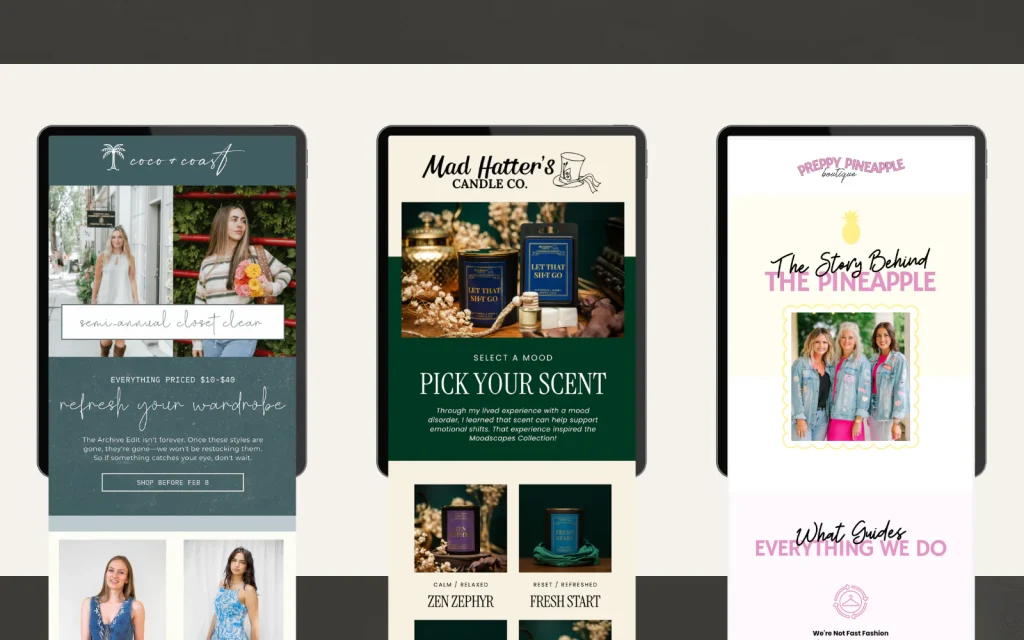
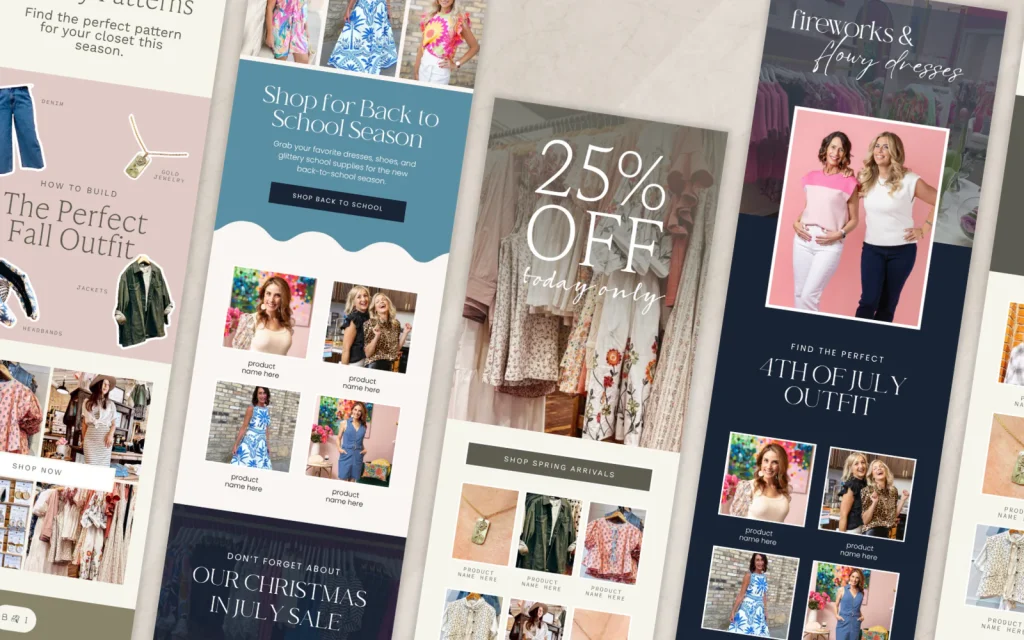
Both platforms let you build branded emails, but Klaviyo gives you a lot more flexibility in how those emails look and function.
With Klaviyo, you can build emails that include product recommendations based on what a specific customer has browsed or purchased. You can add conditional content blocks that show different messaging to different segments within the same email. You can create templates that match your boutique’s look and feel down to the detail.
The result? Emails that feel less like a generic promotional blast and more like a personal shopping experience from your store. And that’s a huge trust builder, especially for boutiques where the personal touch is what keeps customers coming back.
Cost Considerations
This is the section where Shopify Email has a clear advantage, and I want to be straightforward about that.
Shopify Email is more affordable, especially for smaller lists. Klaviyo’s pricing scales based on the number of contacts in your account, which means the cost grows as your list grows.
But here’s how I encourage boutique owners to think about it: Klaviyo is an investment in a system that generates revenue. Many retailers I’ve worked with find that the additional sales from automated flows and smarter segmentation far outweigh the monthly cost of the platform. When your abandoned checkout flow alone is recovering revenue you would’ve lost? The platform is paying for itself.
Why I Typically Recommend Klaviyo for Boutique Owners
While both platforms have a place, I almost always recommend Klaviyo for boutique owners who are serious about growing their business through email.
And here’s why: email marketing for a boutique is so much more than sending a weekly newsletter with your latest arrivals.
It’s about building a system that keeps your brand in front of your customers and gives them a reason to come back, over and over. Klaviyo makes that possible because it gives you access to deeper customer data, smarter automation, and more advanced marketing tools than Shopify Email can offer at this point.
Think about the difference between these two approaches:
Sending one newsletter to your entire list announcing your spring collection… versus sending a targeted restock alert to customers who bought from that collection last year, a “first look” email to your VIP segment, a new subscriber intro to the collection with your brand story woven in, and a browse abandonment follow-up to anyone who looked but didn’t buy.
That’s the difference between sending emails and having an email strategy. And for independent boutiques trying to compete with bigger brands that have entire marketing teams? That strategic approach can make a huge impact on your revenue.
Getting Started with Klaviyo for Your Boutique
So there you have it! The real differences between Shopify Email vs Klaviyo, and why I typically recommend Klaviyo for boutiques that are ready to get serious about email marketing.
I will say this, though: Klaviyo is a powerful tool when it’s set up correctly. To get the most out of it, you need the right automations in place, your audience properly segmented, branded templates ready to go, and a strategy behind your campaigns. Without that foundation, you’re paying for a Ferrari and driving it in first gear.
That’s exactly why I take a “done-for-you to do-it-yourself” approach with my email marketing clients. I build the foundation (the automations, segments, integrations, and templates), and then I make sure you have the tools and knowledge to run your campaigns going forward. Because you know your customers better than anyone. You just need the right system set up so you can show up in their inboxes with confidence.
My foundational Klaviyo email marketing service includes:
- Klaviyo Email Platform Set-Up
- Website Integration
- Brand Kit Installation
- Branded Consent Pages
- 4 Automated Flows Designed + Built (typically welcome, abandoned checkout, post-purchase, and win-back)
- Unique Subscriber Segments Built
- Reusable Canva Email Templates + Universal Sections in Klaviyo
And if you’d rather start with a DIY approach, my Canva Email Template and Elements Kit is designed with Klaviyo users in mind. It helps you create on-brand emails that look great and are easy to reuse, campaign after campaign.
If you’re currently weighing Shopify Email vs Klaviyo for your boutique, I hope this gives you some clarity! And if you’re ready to make the switch to Klaviyo but want help getting it set up the right way, I’d love to chat.
CLICK HERE to learn more about my Klaviyo email marketing services and let’s build an email strategy that works as hard as you do for your boutique!
This is a guest blog bySimply Lynn’s Creative. Cassidy is a brand strategist, Shopify website designer, and Klaviyo email marketing strategist who grew up in her family’s retail store, The Cook’s Nook, on Main Street in McPherson, Kansas. She helps boutique brands and product-based retailers build strategy-led branding, websites, and email systems that actually drive results. She’s worked with 225+ brands since 2018 and has completed 55+ email marketing projects for retailers just like you.