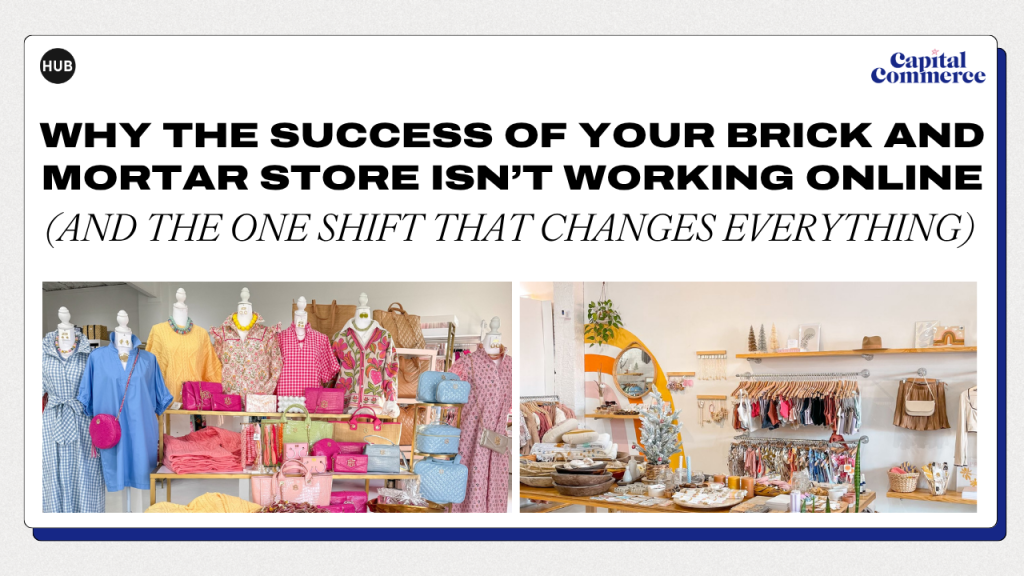
Guest Blog from Josh Orr | Capital Commerce
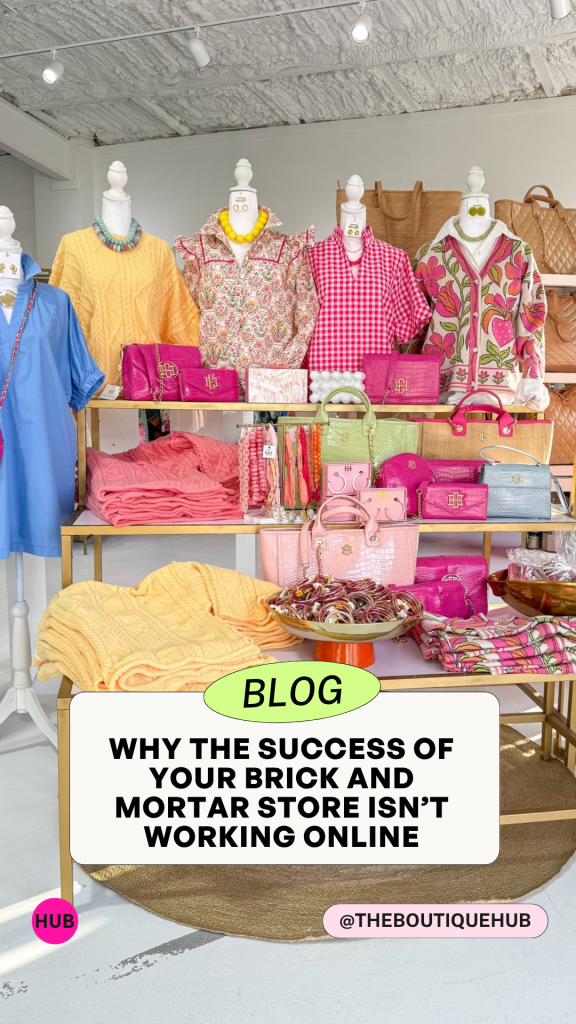
You built something real. Your store has that vibe where people walk in and immediately get all the feelings. Your regulars bring their friends (and most have become friends by now). Your product mix is dialed in. Your merchandising tells a story – one that changes with the seasons, with trends, with your own instincts about what your customer is about to fall in love with.
The whole “in-person experience” thing… you’re good at this.
But here’s the tricky part – why does it feel like none of that translates the moment someone lands on your site?
If you’ve ever caught yourself saying something like:
“We do all the things – post on social, send emails, update the website – but online is maybe 8% of our revenue.”
Or:
“My store is gorgeous. But someone goes to my website, and it’s just… basic.”
If you have, I can promise you that you aren’t alone – and more importantly, you’re not failing. You’re just following the wrong playbook.
That’s the thing standing between you and an online channel that actually performs. Not effort. Not technology. Not budget. The playbook.
The Advice You’ve Been Given Wasn’t Built for You
Here’s what most people in the marketing space don’t say out loud: a lot of the online marketing advice you’ve been given was built for businesses that direct-to-consumer brands that started online – brands with no store, no reputation, and no existing customers. Their playbook is about building trust from scratch. You already have that. Which means you need a completely different strategy.
You’re not trying to build a brand from scratch. You already have a brand. You have loyal customers who drive out of their way to shop with you. You have a physical space that creates trust the moment someone walks through the door. You have a product curation model that’s been proven in the real world, by real people opening their real wallets.
When you take DTC advice and try to apply it to your boutique, you’re not just missing the mark – you’re ignoring all of the amazing things that actually make your storefront exceptional. Boutiques (and other types of curated retailers) and Direct-to-Consumer brand look similar on the surface, but behind the scenes it’s like trying to play basketball with a football playbook. One is about creating a brand. The other is about translating a brand that already exists.
That’s the distinction almost no one is making. And it’s why ‘doing all the things’ isn’t moving the needle.
Your Website Is a Catalog. It Should Be a Location.
Think about what happens when someone walks into your store for the first time. They step inside. They get all the feelings – the music, the lighting, the way everything is cohesive and merchandised by someone with actual taste (and the smell but I haven’t quite figured that online translation yet). In about thirty seconds, that new customer either gets it or they don’t. And if they get it? They’re hooked.
Now walk me through what happens when that same person stumbles onto your website.
If you’re like most boutique owners, your website is a catalog. Products listed, maybe a few categories, some photos if you’ve had time to keep them updated. It’s functional. But it doesn’t do what your store does in those first thirty seconds. It doesn’t make anyone feel anything.
“When people walk into my store, they get it immediately. But online? I don’t think they understand what we’re about at all.”
This is one of the most common things I hear – and it’s exactly the right diagnosis. The experience isn’t translating. Not because it can’t, but because the website hasn’t been built to deliver it.
“My website is so generic compared to my store. Like, my store has personality. The website is just… products.”
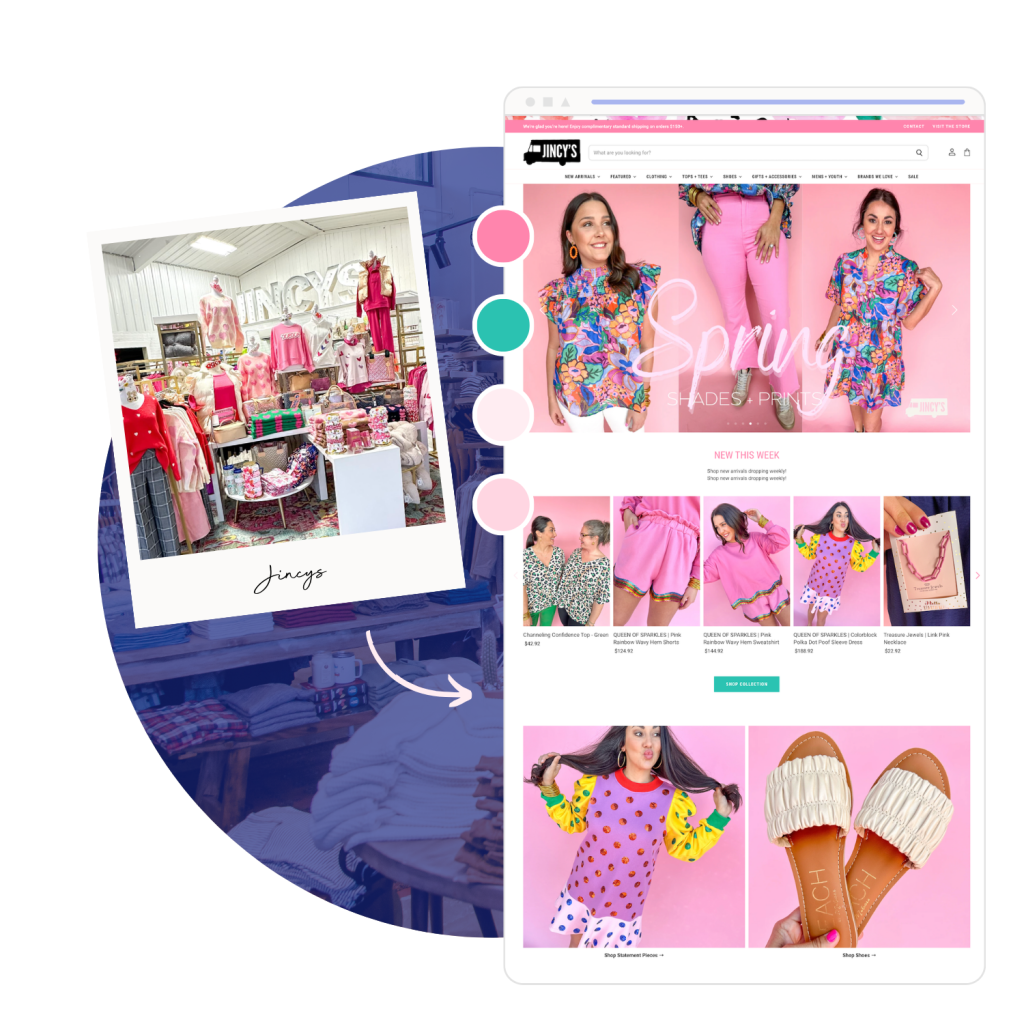
Here’s the shift that changes how you see this: stop thinking about your website as a tool for selling products. Start thinking about it as a second location – one that can deliver the same experience, create the same trust, and make someone feel the same way they do when they walk into your store.
A quick test: next time you’re in your store, ask yourself what makes a new customer ‘get it’ in the first thirty seconds. Then open your website and ask the same question. The gap between those two answers is exactly what we’re talking about.
When you close that gap, everything downstream changes. You start asking different questions – not ‘are all my products listed?’ but ‘does someone landing here for the first time understand who we are?’ Not ‘did we post this week?’ but ‘does this feel like an extension of our store?’
“I think that’s where we’re missing it – how do I take what makes our store special and put that online?”
That question is exactly right. And it’s one that a strategy built for a different kind of business never taught you to ask.
You’re Not Behind. You’re Sitting on a Goldmine.
Here’s a truth that doesn’t get said enough: online-only brands look at brick-and-mortar retailers and they are envious. Not sympathetic. Envious.
They spend years and millions of dollars trying to manufacture what you already have. Customer trust built through real relationships. A proven product mix that someone has already voted on with their credit card, in person, repeatedly. Brand identity that came from lived experience, not a marketing strategy session. Word-of-mouth that extends into communities you didn’t have to pay to reach.
That’s not a small thing. That’s the foundation most online businesses are desperately trying to build.
So when boutique owners tell me they feel like they’re years behind online brands, I always push back. You’re not behind. You’re just not using what you have.
You have an existing customer base that already trusts you – people who would absolutely buy from you online if the experience felt as good as your store. You have a product curation model that’s been battle-tested by real shoppers making real purchasing decisions. You have a physical experience that creates a genuine emotional connection, the kind that DTC brands are trying to manufacture with lifestyle photography and influencer campaigns. You have local authority and word-of-mouth that turns into social proof the moment you bring it online.
The shift isn’t about catching up. It’s about recognizing what you already have and making it accessible to people who will never drive through your zip code – but who would absolutely become loyal customers if they ever found you.
Knowing you have these assets is different from building your business like you have them. Most boutique owners can nod along to this list. The ones who win online make a more fundamental change – they change how they see themselves.
The One Shift That Actually Moves the Needle
The boutique owners I’ve worked with who’ve figured out online – and I mean really figured it out, not just ‘we’re doing okay online’ but ‘online now matches our storefront’ – didn’t unlock some secret marketing tactic. They didn’t find a better email platform or a magic social media formula.
They made one fundamental shift in how they see themselves.
They stopped thinking of themselves as store owners with a website. They started thinking of themselves as brand leaders with two locations.
That identity shift sounds almost too simple to be the whole answer. But follow it downstream and watch what changes.
When your website is a location, you invest in it like one. You don’t let it sit stagnant for three months because you’ve been busy at the store. You don’t settle for product photos that feel like an afterthought. You think about what experience someone is having when they ‘walk in’ for the first time and whether it matches what happens in your physical space.
When online customers are real customers – not second-class citizens who didn’t make it to the store – you allocate real attention to them. You think about their journey the way you think about the journey of someone who walks through your front door.
When you have one brand across two channels instead of a store over here and a website over there, your marketing stops feeling like disconnected activities. It starts feeling like a coherent strategy.
We worked with a retailer who was doing $1.2 million in her store and barely $100K online. She was posting on social media, sending emails, and running the occasional ad. Like so many retailers, she was doing what she was supposed to be doing.
Within a year of making this shift – treating her website like a true second location, translating her in-store experience rather than recreating a generic ecommerce store, and building a unified brand strategy instead of managing two separate things – her online revenue matched her storefront. She didn’t work harder. She worked from a different framework entirely.
That’s what’s available on the other side of this shift.
Your Store Already Proved You Know How to Do This
None of these things happen overnight. This kind shift takes intention and it takes time. It means rethinking some things you’ve probably been doing the same way for years.
But here’s what I want you to hold onto: the boutique owners who are growing online aren’t smarter than you. They’re not more tech-savvy. They’re not better funded. They just stopped applying a strategy that was designed for a completely different kind of business, and they started building on the foundation they already spent years creating.
The blueprint for your online business is already written. It’s in how your store operates – how customers feel the moment they walk in, how your best product mix came together, how your regulars talk about you to their friends. You don’t have to figure this out from scratch. You just have to start reading the blueprint you already have.

About the Author
Josh Orr is the founder of Capital Commerce, an ecommerce growth partner exclusively for brick-and-mortar retailers. With his team, he’s helped hundreds of retail brands translate their in-store success into meaningful online revenue. Learn more at madebycapital.com.