APPLE PODCAST | SPOTIFY | YOUTUBE
Have you ever heard the phrase, “When you aim at nothing, you’ll hit it every time”? It might sound simple, but it’s a powerful truth when it comes to running a successful retail business.
At The Boutique Hub, we live by another variation of this idea: Only a tracked number will grow.
If you’re not actively tracking the most important numbers in your business, you’re missing out on the opportunity to grow them. It’s not about being “good with numbers,” it’s about being intentional with your focus. Because when you consistently track something—whether it’s sales, traffic, or inventory—you naturally start to improve it.
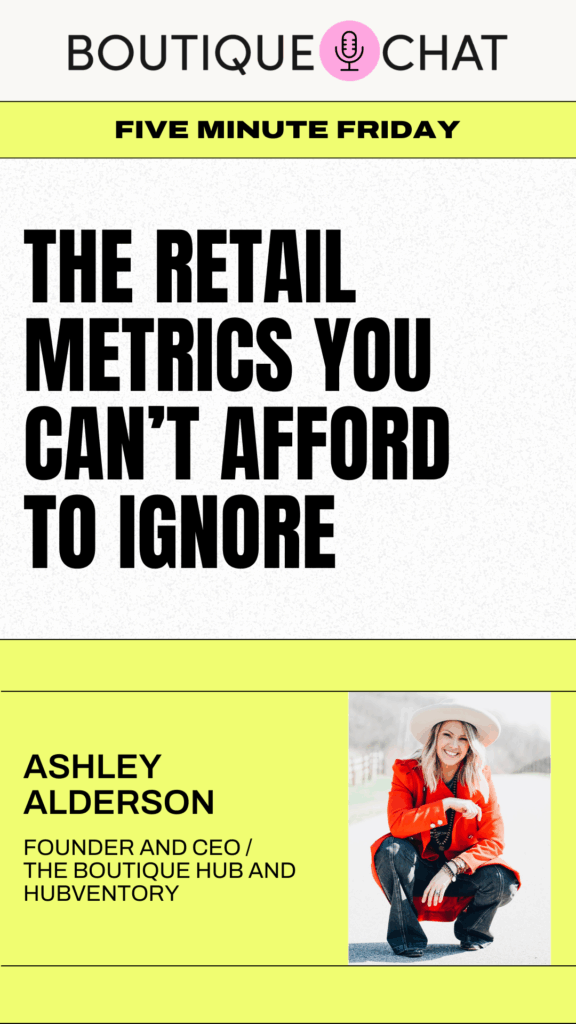
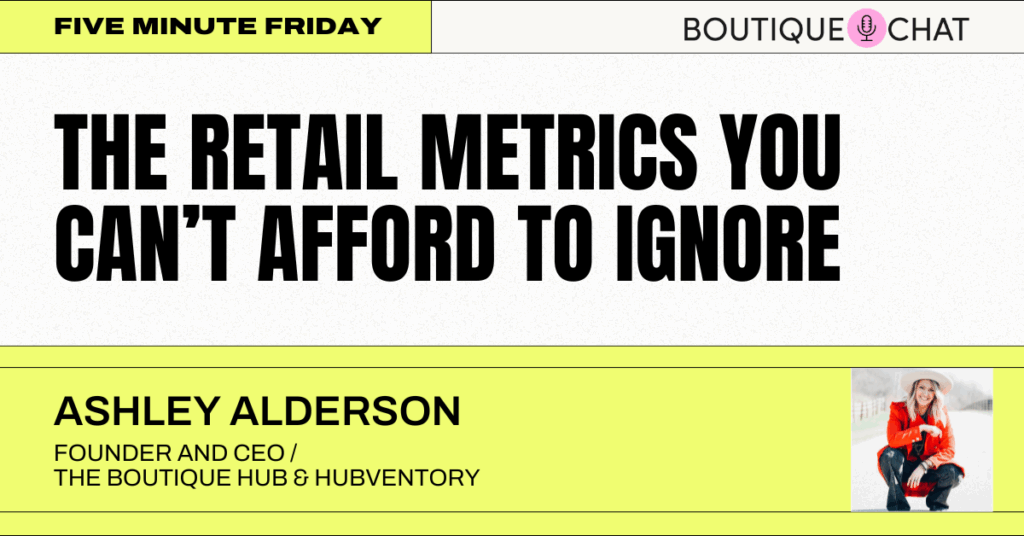
The Retail Metrics You Can’t Afford to Ignore
The Power of a Company Scorecard
Let’s talk about a tool that every growing business needs: a company scorecard.
When I first learned about this concept through EOS (the Entrepreneurial Operating System—check out the book Traction by Gino Wickman if you haven’t already), it completely changed how we operate at The Boutique Hub.
Here’s the big question EOS asks:
If you were on vacation with no communication from your team except for a weekly company scorecard, would that scorecard tell you whether you could relax—or if you needed to hop on the next flight home?
That’s the level of clarity your scorecard should bring.
Now think about your own business. If you’re the only one looking at the scorecard—or worse, if there is no scorecard—it’s like coaching a basketball team without a scoreboard. Your team doesn’t know the score, what quarter they’re in, or what plays to run. You can’t win the game that way.
So, let’s fix that.
What Should Be on Your Scorecard?
The most successful retail businesses don’t just look at top-line sales—they go deeper. Here are the key metrics we recommend tracking weekly:
1. Sales (With Layers)
Yes, you need to know your total sales, but go further:
- Sales by vendor
- Sales by product type or category
- Sales by brand
- Discounts and returns
These details show you what’s really driving your revenue—and what’s dragging it down.
2. Average Order Value (AOV)
AOV is one of the most important metrics to track because it reveals the health of your sales strategy and team. A dropping AOV could point to pricing problems, merchandising issues, training gaps, or weak marketing. A growing AOV? That means your team is selling smarter, not harder.
3. Conversion Rate
How many people are actually buying once they interact with your store or website? Conversion rate tells you whether you’re truly solving your customers’ problems or just pushing products. It’s a key performance metric for both your sales team (in-store) and your marketing team (online).
4. Traffic
You can’t drive more sales if you don’t know how much traffic you need to reach your goals. Using a retail traffic formula, you can reverse-engineer how many visitors your store needs to hit your sales targets. This is critical for planning and measuring the effectiveness of your marketing.
5. Inventory Health
Inventory is your biggest investment—don’t let it sit stale.
- What’s your current inventory on hand?
- What percentage is aged 30, 60, or 90+ days?
- What do you have on order?
If your inventory is aging and you don’t have fresh product on the way, your future sales will take a hit.
Make It a Team Effort
It’s not enough for you, as the owner, to know these numbers. Your team needs visibility too.
- Your sales team should track AOV and conversion rate.
- Your marketing team needs to understand traffic goals.
- Anyone helping you buy needs to know inventory levels and aging.
When your entire team understands the numbers and how their role impacts them, they can take action to improve them. That’s how you create a culture of accountability and growth.
Final Thought: Coach Like a Pro
Remember that basketball analogy? You wouldn’t send a team into a game without a scoreboard, a playbook, or a strategy. So don’t run your business that way either.
Give your team the tools they need. Create your company scorecard. Track the right numbers. Review them weekly. And empower your people to take action when the numbers shift.
Because only a tracked number will grow.
Let’s Connect #AskAshley
- Have a question or guest recommendation? Let us know your feedback directly here!
- Do you love the Boutique Chat Podcast?! Subscribe to our podcast and after that, leave us a review on iTunes Apple Podcasts here!
Must Have Resources
- Traction: Gino Wickman
- Free Retail Traffic Calculator
- Join The Boutique Hub Community
- Follow Ashley on Instagram
- The Boutique Hub: Website | Facebook | Instagram | Pinterest | TikTok | YouTube
Recent Posts:
- #817: Purpose First. Profits Follow: The Evolution of John Mark Enterprises
 What does it take to turn a high school side hustle into a thriving retail brand, wholesale business, and nationally recognized name? Ashley Alderson sits down with John Mark Sharpe (John Mark Enterprises) as he shares the incredible journey from selling wreaths out of a guest bedroom to building a multi-location business, launching a successful… Read more: #817: Purpose First. Profits Follow: The Evolution of John Mark Enterprises
 - Denim & Diamonds: Everything You Need to Know About the Boutique Summit 2026 Closing Party
 After two incredible days of learning, networking, and growing your business, it’s time to celebrate. Join us for the official Boutique Summit 2026 Closing Party—an evening filled with great food, live music, new friendships, and plenty of unforgettable moments. Whether you came with your team or arrived knowing no one, this is one of the… Read more: Denim & Diamonds: Everything You Need to Know About the Boutique Summit 2026 Closing Party
 - Five Minute Friday: How Boutique Owners Can Create More Motivated EmployeesWhy do some employees take ownership while others just go through the motions? The answer isn’t usually more rules, more checklists, or more micromanagement. The most motivated teams understand the purpose behind their work, know how success is measured, and feel empowered to contribute to the outcome. Sara Burks shares 3 PRACTICAL WAYS to motivate… Read more: Five Minute Friday: How Boutique Owners Can Create More Motivated Employees