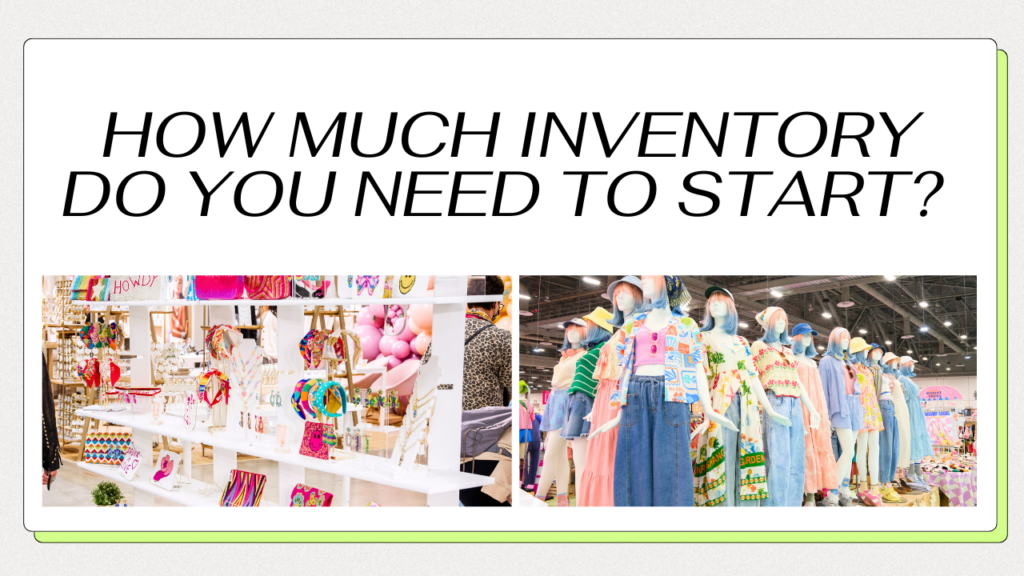
Starting a boutique is an exciting venture, but one of the biggest questions new boutique owners face is: how much inventory do I need? The answer isn’t one-size-fits-all, as it depends on your business model, budget, and customer demand. However, having a strategic approach to inventory planning can set you up for success from day one.
Want an in-depth guide on determining the right amount of inventory to start with? Download our FREE guide here: How Much Inventory Do I Need to Start?
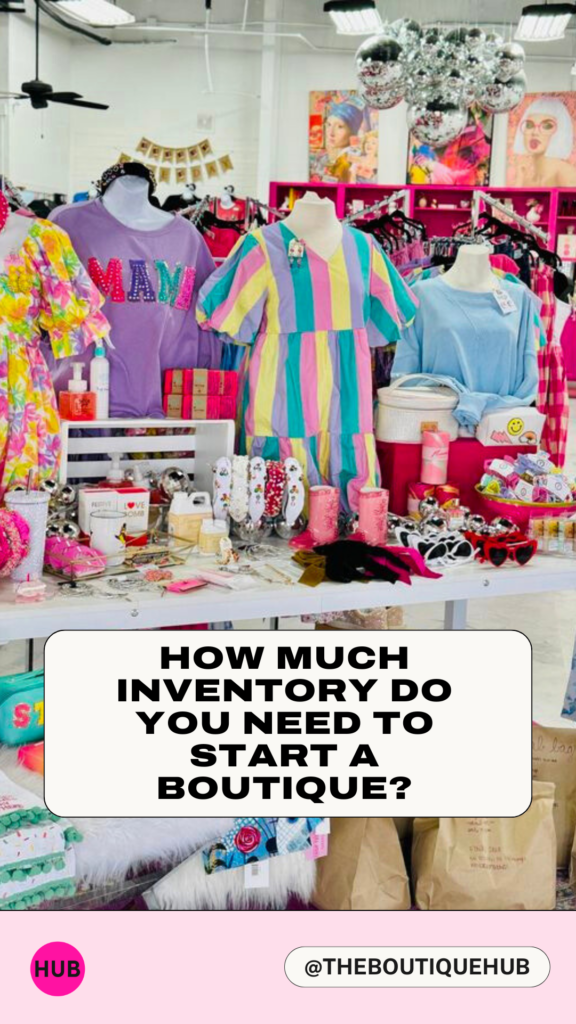
Factors to Consider When Buying Inventory
1. Your Boutique’s Business Model
- Brick-and-Mortar Boutique: If you’re opening a physical store, you’ll need enough inventory to fill your space without overwhelming it. A well-stocked boutique creates an inviting shopping experience, but too much inventory can lead to clutter and excess stock.
- Online Boutique: Without the constraints of a physical location, you can start with a smaller, curated selection. You may choose a pre-order or drop-shipping model to minimize upfront inventory costs.
- Pop-Up Shop or Market Events: If you’re selling at events or pop-ups, your inventory should be tailored to fit the theme, season, and expected foot traffic.
2. Determine Your Inventory Categories
To create a well-rounded boutique collection, start by breaking your inventory into key categories:
- Tops: Blouses, casual tops, sweaters, layering pieces, blazers
- Bottoms: Jeans, skirts, shorts, slacks
- Dresses: Casual, special occasion, seasonal, rompers
- Outerwear: Jackets, coats, vests
- Accessories: Scarves, hats, socks
- Jewelry: Necklaces, rings, bracelets
- Home Decor & Gifts: Candles, stationery, prints, baskets, journals, seasonal items
3. Establish an Inventory Breakdown
Where do you predict your sales to come from? A general rule for new boutiques is that 50% of your inventory should focus on the top half of the body, as these items tend to get more compliments and are easier to sell.
Here’s an example of a starting inventory budget allocation:
- Tops: 50%
- Jewelry: 15%
- Accessories: 15%
- Bottoms: 10%
- Outerwear: 5%
- Home Decor & Gifts: 5%
4. Start with Sales Projections
Estimate your first 3-6 months of sales based on expectations, market research, or similar businesses.
Use this formula to calculate projected monthly sales: Projected Monthly Sales = Average Order Value × Expected Foot Traffic or Online Orders
For example, if you expect 300 transactions per month at an average order value of $50, your projected monthly sales would be $15,000.
5. Determine Your Inventory Investment
Your starting inventory should be 2.5 to 3 times your projected monthly sales to ensure you have enough stock while allowing room for new arrivals.
For example, if your projected monthly sales are $30,000, your initial inventory should be valued at $75,000 – $90,000 at retail price. Depending on your markup, you can then determine your wholesale investment.
How to Avoid Overstocking
Buying too much inventory can tie up your cash flow and lead to markdowns. To prevent overstocking:
- Start with 1-2 packs per style and restock bestsellers.
- Use pre-order or waitlist strategies to gauge interest before making bulk purchases.
- Monitor sales trends and adjust your buying strategy accordingly.
Final Thoughts
Starting a boutique with the right amount of inventory requires a balance between variety and financial sustainability. Begin with a curated selection, track your sales, and adjust as needed. With strategic inventory planning, you can grow a successful boutique that keeps customers coming back for more!
Ready to take the guesswork out of inventory planning? Download our FREE guide here: How Much Inventory Do I Need to Start?
Need help sourcing inventory? Check out Hubventory for exclusive wholesale collections and trending styles perfect for your boutique!
Get more information on growing your business by joining The Boutique Hub where we have tons of training, strategies, and most importantly, connection! Try out our service for a month, cancel anytime.
- Five Minute Friday: The Biggest Buying Mistakes Boutique Owners MakeBuying inventory shouldn’t feel like gambling. Sara Burks shares the questions every boutique owner should ask before placing a wholesale order. From understanding prepacks and sizing to shipping costs, return policies, and merchandising, these simple decisions can determine whether your inventory sells—or sits on the rack collecting dust. You’ll learn: How to evaluate wholesale vendors… Read more: Five Minute Friday: The Biggest Buying Mistakes Boutique Owners Make
- The Boutique Hub at MAGIC New York
 The Hub Team is heading to MAGIC New York again and we couldn’t be more excited! With over 320+ brands, you are sure to find more MAGIC in a (New York) minute!
 - The Boutique Hub at Vegas Fashion WeekThe Boutique Hub at Vegas Fashion Week We are so excited to announce that The Boutique Hub will be at Vegas Fashion Week! With so many sourcing opportunities, Vegas Fashion Week is a ‘must-attend’ event!
- #821: The Truth About Boutique Growth, Burnout & Staying Consistent
 Can you really build a successful boutique without burning out? For the past 10 years, Ashton Dockery has been part of The Boutique Hub while building Be You Boutique from the ground up. What started as an online boutique at just 18 years old has grown into a successful brick-and-mortar business—and along the way she’s… Read more: #821: The Truth About Boutique Growth, Burnout & Staying Consistent
 - Five Minute Friday: Why Every Boutique Owner Needs a Business PlanDo you actually need a business plan to run a successful boutique? The answer is yes—but probably not for the reason you think. A business plan isn’t just paperwork for investors. It’s the roadmap that helps you define your mission, identify your ideal customer, clarify your value proposition, and prepare for the challenges every retailer… Read more: Five Minute Friday: Why Every Boutique Owner Needs a Business Plan